Published
8 minute read
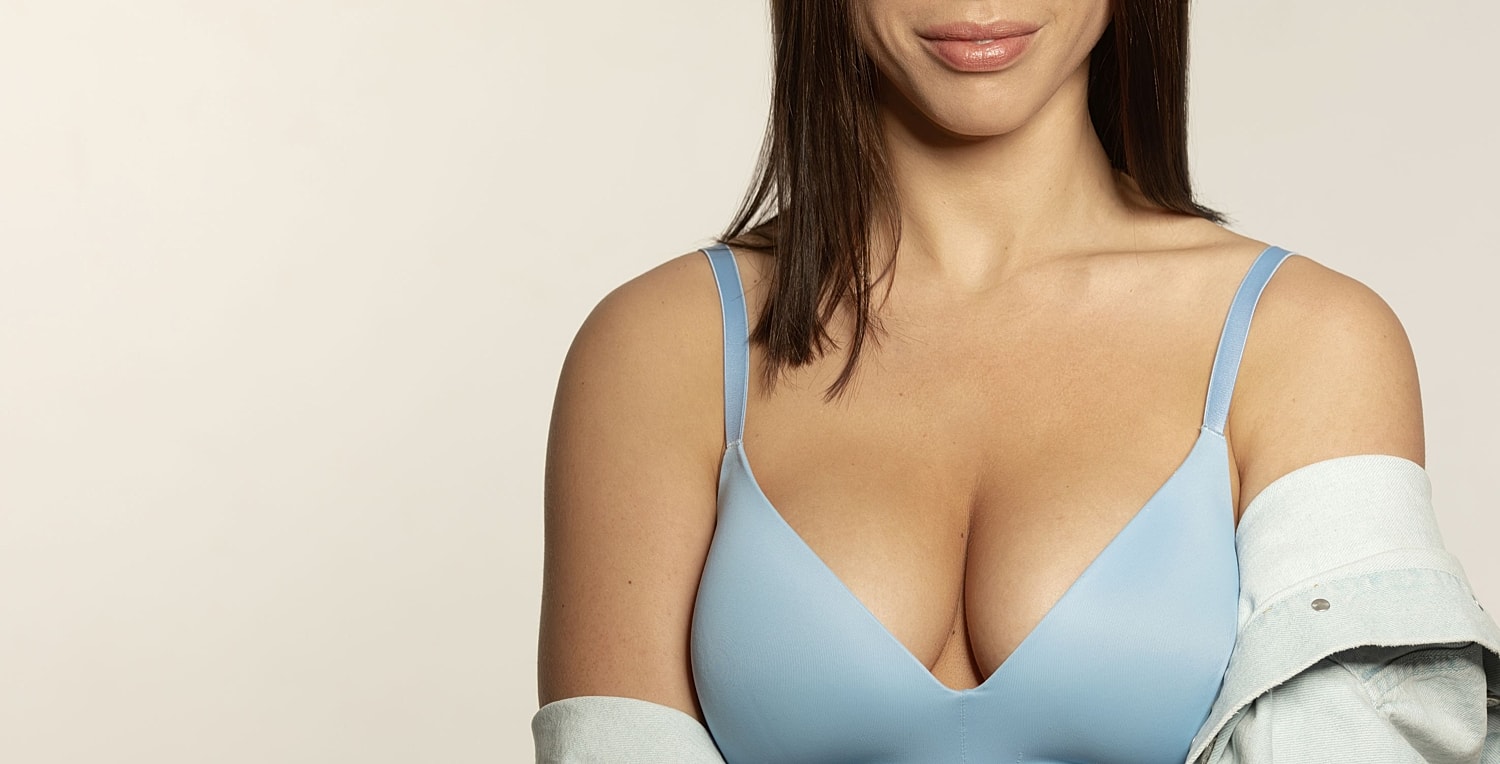
Many women who visit Dr. Michele Shermak for breast augmentation have thought about it for a long time. They’ve collected photos, experimented with different bras, or noticed changes in their breasts after pregnancy, breastfeeding, weight loss, or aging. Some have always wanted fuller breasts, while others miss the volume they once had. They have concerns that are sometimes difficult to express, like becoming larger than they want or having breasts that don’t suit their body. Most importantly, they still want to look like themselves.
Dr. Shermak takes these concerns seriously. She begins each breast augmentation by focusing on the individual: her body, her preferences, her lifestyle, and the changes she wants. Achieving a natural look starts with understanding the person, not just their chest.
Natural-looking breast augmentation means the breasts fit the patient’s body and match what she wants. It isn’t about a specific size. A petite woman might choose a subtle change, while someone with a broader chest may need more volume for balance. Another may want fuller cleavage but still prefer a natural look.
Dr. Shermak considers the width of the chest, how much breast tissue is present, the position of each breast, and the skin’s strength. She also looks at the overall body shape. The same implant could look subtle on one person and more noticeable on another.
The natural breast shape matters just as much as the implant. Breast tissue helps cover the implant and smooth the transition from the upper chest. Thin tissue can make implant edges or rippling more visible. Stretched skin might need extra support beyond what an implant offers. Dr. Shermak takes all of this into account when planning treatment.
Breast augmentation starts long before surgery. In the consultation, Dr. Shermak asks what the patient wants to change and what she hopes to keep.
Patients can try real implants in a bra to see how different sizes look. Dr. Shermak personally helps with sizing and encourages patients to return before surgery if they want to try again. There’s no rush; patients should take their time to decide.
Reference photos help patients show what they like, but their own body will affect the final result. Dr. Shermak uses these images to understand each request and then considers how it fits the patient’s body. Activities like running, work, childcare, and clothing choices all influence how a woman feels about breast volume as well. The implants should fit her real life.
Cup size isn’t a reliable measurement for surgery. Bra sizes vary between brands, and the cup letter doesn’t tell you about width or projection. Breast implants are measured in cubic centimeters (cc), and volume is just one factor to consider.
The width of the implant affects how it fits across the breast, while the profile determines how far it sticks out from the chest. If an implant is too wide or too narrow, it can change the breast’s shape. Dr. Shermak looks at width, profile, volume, tissue coverage, and the patient’s goals together.
Silicone and saline breast implants feel different, though both have a silicone shell. Saline implants are filled with saltwater after they’re placed, which is helpful if the breasts need different amounts. Silicone implants are filled with gel and usually feel softer, especially in women with less tissue. The choice depends on the patient’s body and preferences.
An implant can be placed above the chest muscle, under the muscle, or partly covered by muscle at the top. Each option changes how much tissue covers the implant, how it moves, and how recovery feels. Dr. Shermak picks the placement that fits each patient best.
Breast augmentation is done under general anesthesia and usually doesn’t require an overnight stay. Incisions can be made under the breast, around the areola, or in the armpit. Dr. Shermak decides on the best spot based on the implant, the patient’s anatomy, and what she needs for access. She uses a temporary sizer to check proportions before placing the final implant.
For some patients, Dr. Shermak offers the Preservé technique with Motiva implants. This method uses a smaller incision and preserves more of the breast’s support structures, which can make the early recovery period easier.
Smaller breast implants are more popular now, but Dr. Shermak doesn’t see small as the only right choice. Some women want a subtle change after pregnancy, while others want a noticeable increase in size or more fullness at the top of the breast. A good result can match any of these goals.
A more important question is how much volume the body and breast tissue can support comfortably. Larger implants add more weight to the skin and internal structures over time. Dr. Shermak talks about these long-term effects as well as the look the patient wants now.
As a board-certified plastic surgeon, Dr. Shermak explains what a chosen size could mean for tissue coverage, exercise, and long-term support. The final decision always belongs to the patient.
Breast augmentation adds or restores volume, but it can’t fix every change in breast position. Pregnancy, breastfeeding, weight loss, and aging can stretch the skin and lower the breast tissue. A large implant might make the breasts heavier without giving the desired shape.
In these cases, Dr. Shermak may suggest a breast lift along with augmentation. The lift raises and reshapes the breast, while the implant adds volume. By treating position and volume separately, she can better control the final result.
Breast fat transfer can soften the edge of an implant, improve uneven contours, or add a small amount of volume, but it can’t replace the support of a lift if the breast has sagged.
Many women with breast implants also want a more natural look. A patient might have been happy with her original augmentation but now feels the size doesn’t fit her anymore. Changes like pregnancy, weight shifts, menopause, exercise, or new clothing styles can all affect what feels right.
Some women want implant revision because their implants feel heavy or look too noticeable. Others experience movement, rippling, rupture, or capsular contracture, which happens when scar tissue tightens around the implant. Patients with symptoms they believe are linked to breast implant illness should get a medical evaluation and have an honest talk about what research can and can’t tell us.
Downsizing allows a woman to keep her implants but with less volume or projection. Breast explant surgery removes the implants completely. As a woman’s needs change, breast surgery can adapt to her current situation.
Switching from a large implant to a smaller one might seem straightforward, but the breast tissue may react differently. A large implant can stretch the skin and the pocket inside the breast. If the new implant is much smaller, it might move, sit too low, or leave the breast looking deflated unless the space is repaired.
Dr. Shermak checks the implant’s position, the pocket, nipple placement, breast tissue, and skin quality. A small change might only need a direct swap, but a bigger reduction could require pocket repair, a breast lift, fat transfer, or a combination of these methods.
Revision surgery requires a different set of skills than first-time augmentation. The surgeon needs to know how the first surgery changed the breast and how factors like implant weight, scar tissue, and aging have played a role. Dr. Shermak has performed over 1,800 breast augmentations and uses that experience to guide decisions about volume, support, and shape.
Breast implants aren’t meant to last a lifetime. Patients might need another surgery due to rupture, capsular contracture, changes in position, or simply a new preference. Women with silicone gel implants should follow their surgeon’s and manufacturer’s monitoring advice. Regular breast cancer screening is still important after augmentation, and the imaging center should be told about the implants.
It’s impossible to predict every change that pregnancy, weight, hormones, or age might bring. Having a good plan gives patients a solid starting point. Dr. Shermak always aims for results that suit the woman as she is now and respect her natural tissue. The implant might be small or large, but success means the patient looks in the mirror and still sees herself.